
Thinking Sideways – An Interview With Jennifer Shahade
by Ben Graff

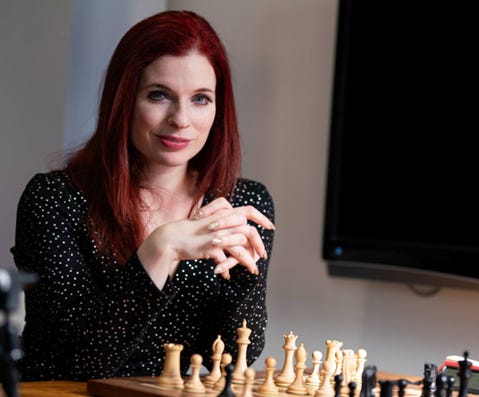
Jennifer Shahade is a three-time national chess champion, a successful poker player, and a deeply perceptive writer. In the first of a two-part special, I sat down with Jennifer to discuss her new book Thinking Sideways. It was a wonderful experience, and it is a privilege to share our conversation here.
This will be followed in next month’s column by a full review of Jennifer’s excellent work. Thinking Sideways is truly destined to be one of the best chess books of 2026!
BG: I wondered if you could just tell me a little bit about why you wrote Thinking Sideways, and what you would like readers to get from your book?
JS: I think the main interest for me in writing Thinking Sideways was to explore three ideas that I had been thinking about for several years.
I wanted to deconstruct the notion that chess players think really far ahead, and hence that’s how other smart people should think. As chess players know, but a lot of non-chess players just don’t know, that’s a very simplified version of the process. More and more in the real world we see how difficult it is to plan ahead as change accelerates. So I thought that showing that chess is actually more about finding the right options than it is about thinking ten moves ahead - with exceptions, of course - would be helpful. I felt it would be useful for non-chess players to see this.
I also wanted to help young people, and frankly anyone who is struggling with change in their lives, by showing them that it is good to be flexible, and to be constantly on the lookout for new options. It’s almost good not to have a super long-term plan.
Finally, I was really looking at the careers of people like Demis Hassabis, the CEO of DeepMind Technologies, who used chess to do something very big outside chess in terms of his pioneering work on AI. Demis has been well known in Silicon Valley for a long time, and is now a household name. So much of chess is a way of thinking, and you can use this not only to become a chess champion, but to do other important things outside the game.
BG: One of the key pieces of advice I took from your book was about trying to stay present in the moment. I wondered if you could expand on this?
JS: Staying present in the moment is very challenging in today’s society. I think that’s one of the reasons why people are gravitating towards chess. It absorbs you, and takes you away from the constant notifications on your phone. This is why you are seeing chess meet-ups proliferating everywhere, including in London, New York City, San Francisco, Los Angeles, Atlanta and Austin. We are even starting to get a scene up in Philadelphia with the Rittenhouse Chess Club and other pop-ups, and I can’t wait to see where it goes.
Another way to think about this, which I talk about in Thinking Sideways, is that while people see chess in terms of thinking a long way ahead, it actually keeps you grounded in a particular moment, which is very precious.
BG: You talk about the perils of believing you have to be a genius if you want to achieve anything, and how this can hold people (and particularly women) back. It would be great to explore this further.
JS: That’s right, and I have co-authored some research about this topic, which I cite in the book, that demonstrates that when people are shown the graphs of various players’ progress, they tend to underrate the chances of female players becoming successful. This effect is most pronounced with players of average talent. Maybe ‘talent’ is not the right word, because I’m more trying to get at the fact that I’m not thinking about the superstars in the class. It’s more where, if players seem to be stagnating, there seems to be a tendency with boys for coaches to say ‘he just needs more time’, whereas a girl might be written off more quickly. That’s what I love to do when I’m speaking or educating. I’m not looking for the person who is already a superstar. I’m looking for somebody in the crowd who doesn’t think that they are a superstar yet, but needs some inspiration to help unlock their true potential.
BG: One of the other things you said, which was really interesting, was that Steve Jobs was neither the best coder nor the best designer, but in the intersection between the two he found his superpower. How did you go about finding your own superpower, and is there anything from your own learning that would help readers to unlock theirs?
JS: It’s always been natural for me to like doing combinations of things that others wouldn’t expect, and to find whacky intersections between them. That’s why I love writing about this topic, and trying to help people find out for themselves. I think a lot of it comes from my parents, because they were both like that. My dad was a chess champion and a triathlete, and my mom was a professor, a bookie and a gourmet chef. They both used weird combinations of different things to become legendary. My dad was known as ‘Iron Mike’, and when he went to a triathlon everybody there always asked him about chess. Equally, whenever he played chess the other players would ask him for fitness tips, and want to explore how he packed everything in! With my mom, she would lecture on organic chemistry for a class at Drexel University in Philadelphia, and make a bunch of jokes about the Sixers and Eagles, and everybody would wonder: how does this woman know all this random stuff! So I absolutely had good role models!
The whole intersection of chess, literature and art, and the incredible creativity we see in the online space, all fascinates me, although there is also something very ephemeral about online content too.
BG: You’ve obviously got a very artistic side to you, and a very analytical side too. For you personally, which one is more ‘you’, or is that an impossible question?
JS: In general I probably have more friends who are on the analytical side from poker and chess. However, when I’ve been hanging out with artists, I do feel very much at home there as well. It’s hard sometimes, because I find that both spaces are calling to me - which is why finding middle spaces and intersections is so important. I would just also mention the World Chess Hall of Fame, which is an entire museum with staff devoted to finding intersections between chess and art.
BG: You write in a very compelling way about chess cheaters. It’s clearly a big problem for the chess world which damages everyone (including those who get caught cheating). How do you think the chess world should approach this in future?
JS: It’s a really tough issue. One of the challenges is that online ratings were considered less significant than over the board ratings historically. While that is probably still the case, there are some really prestigious online tournaments, and players do care about their online numbers. For example, the fact that Alice Lee recently became the first woman to hit 3000 online is something people rightly celebrate.
Therefore this means that we are no longer in a world where we can say online cheating doesn’t count as much. I think that is one of the reasons that the Hans Niemann/Magnus Carlsen incident was so divisive. There were different sides to this story. Sticking to the point, Hans did admit to cheating online, and said these were meaningless games. But this was just at the moment, in 2020 or 2021, when that statement was not as true as it used to be.
Online games are meaningful. Higher online ratings will get you more sponsorship, and sometimes the prize money in online events is better than it is in over the board tournaments. I think we have to reckon with that in our culture. Clearly Chess.com is making it harder for people to cheat and get away with it, but it remains a challenge.
I do write about the potential for rehabilitating cheaters, but it is a tough one, as recidivism is very high, particularly among older cheaters. Younger cheaters are more likely to learn from the experience and to not want to repeat it, if we are optimistic, but it is very hard, isn’t it? I certainly think parents have a role to play if children are playing in online prestigious tournaments in terms of being aware of the pitfalls of cheating, and ensuring that embarrassment and potentially longer-term repercussions are avoided.
BG: Speaking of children, there is a lovely section in Thinking Sideways where you write about your son’s experience in his first-ever tournament game, when afterwards he talked so happily about the experience without telling you the result. (He’d actually lost.) What do you think parents should learn from this?
JS: It was very sweet moment: my son lost, but had so much fun. He loved the atmosphere of playing with the other kids, and it’s a precious memory.
I understand the dilemma for chess parents. When children are very little it is so much about enjoying the process. However, equally the drop-out rate from chess for all genders at around 11, 12, 13 is quite high. By this point players have worked on their tactics, developed their openings, and played in some tournaments, so most likely need to dig a little deeper to make more progress.
Most parents instinctively see that chess can be a very positive force in their children’s lives, so are keen for them to do well enough not to feel miserable after the event, and to want to keep playing. So it is a little tricky, and it’s about finding the right balance. Finding ways to make chess fun is important. If someone is a little older they might like the sense of humour in Gotham chess videos. For someone else an introduction via chess problems, or maybe by looking at beautiful chess sets from the past, could inspire them. Watching The Queen’s Gambit could also inspire a female player. There is some adult content, but you’d be surprised that some episodes have a lot less than others. So a parent can look through, and perhaps pick the episodes that are most appropriate for their child. Ultimately, if you get your child interested they’ll do more work on their own. It’s all about thinking sideways!
BG: I was very interested in what you wrote about chess ratings. You quoted Ben Finegold, who noted that our ratings are defined by our worst moves rather than our best moves, and that in effect, whatever our rating, it never makes us happy of itself. It’s a big problem for players at all levels, which you touch on in the book…
JS: I think it is a serious issue in chess right now. There is a lot of rating deflation. Perhaps one thing that is countering this is that players have a lot of different over the board and online ratings now, so a player’s eggs aren’t all in one basket. I think that’s a good thing, as it means that everyone has multiple ways of getting affirmation that they are performing a task well. However, there has been some learning for me in relation to how I do simuls. Sometimes if they need to be concluded quickly, I might say no over 1800s. But one day I let someone in who said he was 2000, and I could tell by his moves that he wasn’t. It transpired it was a puzzle-solving rating, which has made me realise that I need to ask more precise questions, so that I don’t inadvertently lock out participants who might legitimately have played.
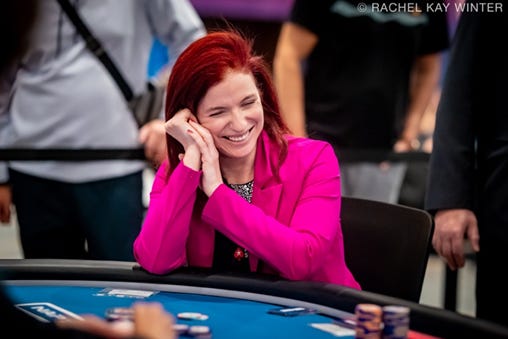
BG: You play a lot of poker. Do you prefer chess to poker, or is that a tough one?
JS: It’s a pretty tough one. I think they say there are more books about chess than any other subject except religion. There is a real culture and a history, and an ability to use chess for cognitive development, which makes chess very special.
But poker does have some amazing attributes too. It’s more social. You can talk while you are playing, which you absolutely can’t do in serious chess. You also learn a lot from poker - particularly if you are trying to get better with money and business poker is unparalleled.
And then the other thing - the one negative thing, I think - about chess is that it is very ageist. It’s really promoted in educational institutions, but the problem is that when grown-ups play or take up chess they are often mocked when they lose against youngsters. They’re not taken seriously because there is so much focus on children. Obviously you don’t have that in poker, since only adults can play. I think there should be more adult-only chess events. We’re starting to see more of these in American night clubs and so on. You also have issues with disputes in chess, in that if they are between an adult and a child there is a tendency to favour the child, and that reduces the incentive for people to grow up. So essentially, while it is fantastic that chess offers so much to juniors we do have to guard against ageism too.
BG: What are your final reflections on Thinking Sideways?
JS: I partly wrote the book for myself, because I feel like it really helped me with ideas and pathways that I needed to develop in my brain and my life; so I’m really hopeful that it will do the same for people who read it. That there will be something in Thinking Sideways that will help readers see things in a good way - in particular, to see things in a positive way, even though life is hard and self-improvement is hard. I try to take the positive viewpoint that there is usually something active that we can do.
The other thing around the writing of a book is that I feel that our culture is unfortunately becoming a little bit less humanist because of the rise of AI. Even some of the tech leaders say negative things about humans. I find this to be really concerning. I’ve always identified as a feminist, but now I find myself identifying as a humanist as well. Thinking Sideways is a very humanist book. When we think about our own development we’re looking to be the best humans we can be in a rapidly changing world.
BG: What are your plans for the future? Will you be writing another book? I presume there will be more chess and more poker?
JS: I guess I have to follow the advice of my book and say that I like thinking sideways. I don’t have many five-year plans at the moment. Honestly, I don’t. I do love writing, and will probably write at least one more book. Right now I’m honestly very keen to share Thinking Sideways with people, and we have the US launch shortly. I hope that I can find ways to connect with more audiences, audiences of all types - young people, grown-ups, college students and help make people more open to possibility, which is one of the key themes in the book.
There are more possible chess games than there are atoms in the universe, and there’s a heck of a lot more possible lives than that we could be living, so hopefully Thinking Sideways may play a small part in helping readers to be a little happier on a daily basis, and ultimately reach their full potential.